
Special Stories · Week 10
November 5, 2026 · 18 min read
Any given saturday: an in-depth look-in to the new age of college football
CFB Weekly's Noah Greenspan provides an in-depth look-in to the ways college football has adapted, parity has increased, and the bench has changed. Greenspan analyzes past dynasties, the new playoff format, the transfer portal and much more. Read about the new age of the sport and the ways the sport is changing below...
College Sports in the Age of Unpredictability: Why Parity Is the Best Thing to Happen to College Sports
College sports fans have long followed the same cast of characters from season to season. Sure, there might be some new faces on campus from time to time, but the end of the season typically found the same group of teams competing for the national championship.
Fans could spend the year arguing about who was best and debating the talent on campus, but in the end, their team typically wasn’t given a fair shot at competing with the other heavy hitters on the national stage.
Fun Fact: In the 11 seasons from 2014-2024, just six different schools won national championships.
The legacy of those great teams and coaches from days gone by created so much folklore for so many amazing seasons of college football and helped to usher in an era of so much great speculation and debate about who would win it all each and every season.
However, that same legacy also created a false perception among the fans of so many schools that their team was somehow competing for a national championship every season. In reality, their team was likely only competing against other teams from similar programs for a national championship on occasion.
Programs like Alabama, Clemson and Ohio State formed a monopoly on the college football landscape that for a long time, looked like it would last forever.
Innovative player movements, lucrative financial deals, and the increase in postseason matches up for athletes all assist to displace established college sports dynasties.
Such an upheaval in the status quo of traditional college sports can be celebrated because it greatly increases competitive excitement amongst reigning sports powerhouses. These excellent teams are continually being forced to improve in order to knock the other off their perpetual pedestals of triumph.
College sports are at their best when they can be completed and decided in less than three hours and offer hope to more fans and teams than just a handful of already established programs.
The possibility that almost any team can have a great season and compete for a national championship against a powerful opponent is what makes almost all sports so compelling and why in the end almost everyone buys tickets to attend almost every game.
The Monarchy of Yesterday
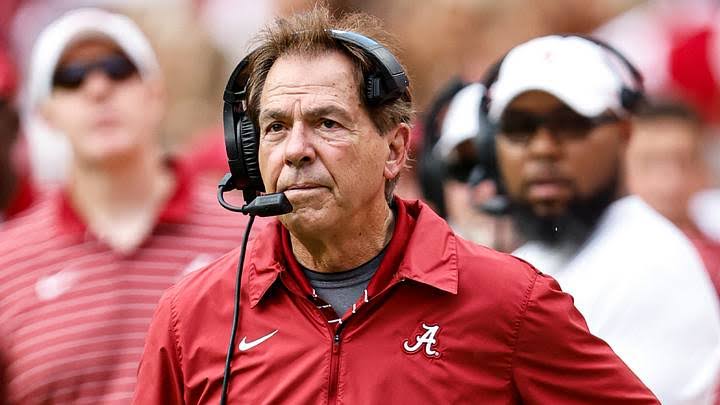
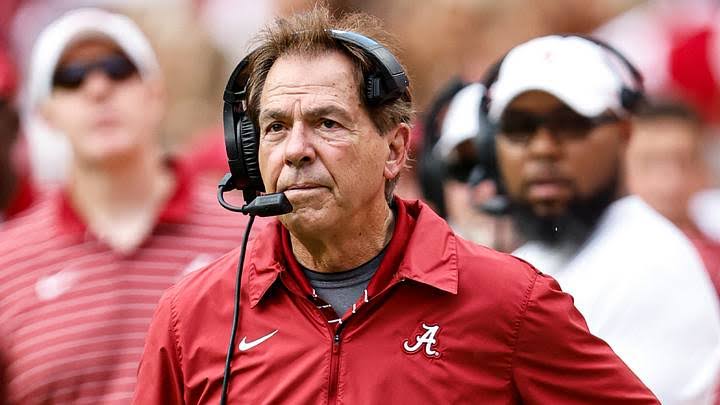
At Alabama, coach Nick Saban was at the center of the dynasty. His program won six national titles in an 11 year span from 2009 to 2020. Saban’s success at Alabama is not just tied to his national titles though.
His program consistently produces talented teams year in and out thanks in part to a top-notch recruiting staff and forward thinking methods of player development.
His program is able to sustain success season after season by molding his players into contributory members of Saban’s team, as opposed to letting them go their separate ways after their time in Tuscaloosa is up.
It is a remarkable phenomenon and also can give the sport a small dimension when one program persists in setting the standard for the rest of the programs. Fans of even excellent programs are frequently reduced to talking about how their team measures up to the mighty Alabama.
Now however, Bama found themselves out of the playoffs a year ago and already with two losses in 2026. The Tide has changed for the Tide and many other former dynasties.
Just as in football, college basketball has its own long history of dominance by one program. For 12 years, Coach John Wooden led UCLA to 10 national championships in basketball, including 7 in a row from 1967 through 1973.

Several other powerful programs have dominated basketball for years, collecting championships and maintaining strong programs through successful recruiting, and their experienced coaching staffs.
College sports are far from perfect. Many powerful and established programs have large advantages to compete for championships. These teams have strong names, talent, great coaches and in some cases, even infinite resources. However, all of these seasons were also filled with upsets, surprised champions and the extremely talented coaches behind them all.
Yes, there were seasons and years of great success for programs outside the normal crop of championship teams. But to reach and sustain such heights was not easy. It required more than a great season or even a few good ones. It required breaking through a structure of advantages, established by decades of previous success.
It matters to distinguish between awarding excellence and awarding success. To be fun, college sports must grant that a few people are very good at what they are doing, but also allow the opportunity for others to build to that same level of success.
What Parity Actually Means
Just because parity has entered the landscape does not mean every team must end up with roughly the same won-loss record for the year. It does not mean that players of less ability than others should be given the same recognition as their more talented counterparts. We want to be able to watch extraordinary individual athletes and certainly to view the games of very excellent coaches.
What we hope for is competitive uncertainty. A favorite must have advantages that make their win look more than just earned. An underdog must play near flawless football to win, but not require a once-in-a-lifetime fluke to do so.
Furthermore, a single surprising match does not create parity in a sport, while a single chaotic weekend does not signal the start of a long-term trend.
True parity must reflect a number of variables such as the distribution of talent amongst teams in the sport, the number of teams that can seriously challenge for a National Championship and most importantly, whether or not the same old brands continually dominate or if opportunity opens up for others.
The strongest argument for college football today is that more programs can make the powerful opposition uncomfortable than in the past, and that fans of more schools can imagine a successful season of national significance.
You don't need hope to be equally distributed. You just need it to get to places it previously only went as part of a university’s recruiting tactics.
The Spirit of 2007
The 2007 college football season was one full of uncertainty. The first weekend of the season included Appalachian State defeating 5th-ranked Michigan 34-32 in a game played by a Div. IAA team against a Div. I-A team with a ranking of 5th in the country at the time.
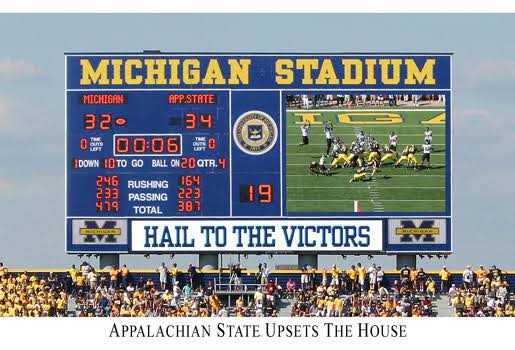
Of course, for Wolverines fans, the game is still a heart-wrenching memory. For the rest of us though, it is a great reminder of how exciting it is to actually have to play the games as opposed to relying on our preconceived notions of what will transpire based on a program’s hardware (helmet), their venue (stadium), their polls, and other factors related to their program’s reputation (recruiting).
Even without wasting time reveling in the sufferings of the favored teams, such a season provided so much enjoyment in watching unexpected matches and expecting surprises in any given game. Every time fans followed the matches of seemingly minor teams, they hoped that some unexpected upset would suddenly change the picture of the national competition.
It is true that today’s college sports model has a number of significant differences from 2007 (e.g., financial model, transfer rules, post-season format and structure), but that doesn’t mean that there can’t be more of that kind of entertainment value in more “normal” seasons.
An event or match cannot be created to generate excitement through the commercialization of a sport. The reality is that competitive games between credible opponents with uncertainty as to the outcome of most matches are necessary. The occasional very competitive match between two greatly dissimilar programs is also very exciting.
The Transfer Portal Changes the Bench
On the other hand, with greater freedom to transfer, players will wait less time to be given more playing time on a better team. The beneficial effect of having future starters on a powerhouse’s bench for several years will disappear, and coaches with weak areas on their team will seek out a proven player at college football’s transfer portal to play for them immediately.
Finally, within college football’s existing framework, greater transfer freedom fundamentally changes the calculation for talented athletes. Heedless of whether favoritism is intended or not, an athlete with great promise can pursue opportunities where he will receive meaningful snaps, be deployed in a system that best showcases his abilities, and receive exposure before NFL scouts and evaluators in due course.
Take the hypothetical of a quarterback who is a third stringer behind a senior at starting quarterback. Does the football player benefit the school to have him on scholarship to use as an emergency backup or would he be better off to move to a school where he can get meaningful snaps and be in a system that fits his skills. Plus he can show off his abilities to NFL scouts.
A guy like Joe Burrow is an example of this. Before Burrow was a superstar for the Bengals and the country's #1 pick & Heisman out of college, he was a subpar third string QB at Ohio State. The portal was what brought him to LSU, and the entire landscape of college football changed forever, and LSU won a natty because of it. The portal has changed the bench and the ways rosters are managed in an extreme manner.
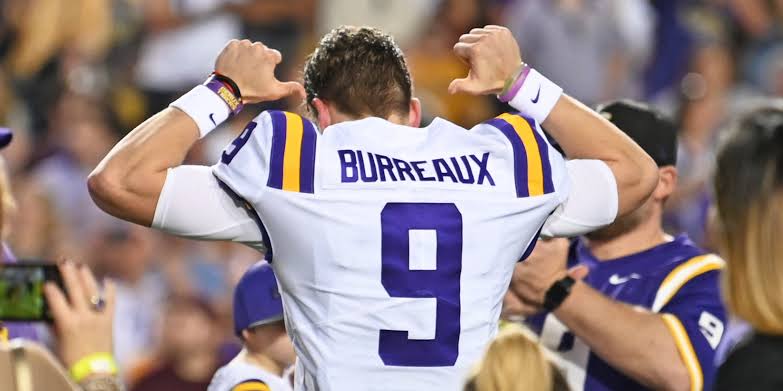
Just because more talent will be able to move to where it is most appreciated does not mean that it will be distributed equally throughout the sport. Top programs will continue to sign elite transfer players to beef up their weaknesses, while lower-level programs will lose talented players who would have stayed for four years in order to develop. The amount of talent that will be spread around in order to allow for more to enter the competition will likely be concentrated in the hands of very few programs.
Though transfer rules may enable major programs to stockpile the talents of lesser trained athletes and seal off layers of depth, facilitating a greater degree of competition is more important. Allowing athletes to utilize their greatest asset to secure their fullest development, and thereby gaining the greatest opportunity to showcase their wares before NFL scouts and other future employers, is far more a means to foster genuine and meaningful competitive parity among schools than would be the mere imposition of strict transfer restrictions upon powerful programs.
NIL Opens Doors Without Erasing Inequality
Name, image and likeness (NIL) can also play into how a player chooses a school for reasons that extend past playing time, coaching, or even location for classes and training. Opportunities for name recognition and development can play into a player’s desire to get better and to receive recognition of their abilities for potential professional consideration.
Note that the House recently settled on a framework for sharing revenue with athletes at participating programs in Division I in approval of the House settlement in 2025. All third party NIL agreements are to be treated separately from this new Mechanism of compensation for athletes, however.
Different. As with almost everything involving the name, image and likeness of athletes at college programs, a wide range of scenarios and financial implications are currently on the table and affecting institutions and different student-athletes in very different ways.
This also means that programs without a history of success can attract top talent. They are able to provide the athlete with opportunities to grow as a player and to get exposure for potential future contracts. They are able to provide a meaningful role to a talented athlete, which in many cases is more than can be said for programs with great histories.
These financial means of attracting players to programs however will not bring equalizing of competition between athletic programs for athletes to play for and go to school. Again, though, the way athletes can earn money from their name, image and likeness at college today is important in that it recognizes that these are individuals who should be able to earn from their work. How all of this affects competitive balance is another story.
Does A Larger Playoff Give Hope?
In evaluating the opportunities for competition, we must also evaluate the opportunities for access to competition. A team that dramatically improves year over year must have a chance to go somewhere other than a bowl game to find out whether it has what it takes to be a national champion.
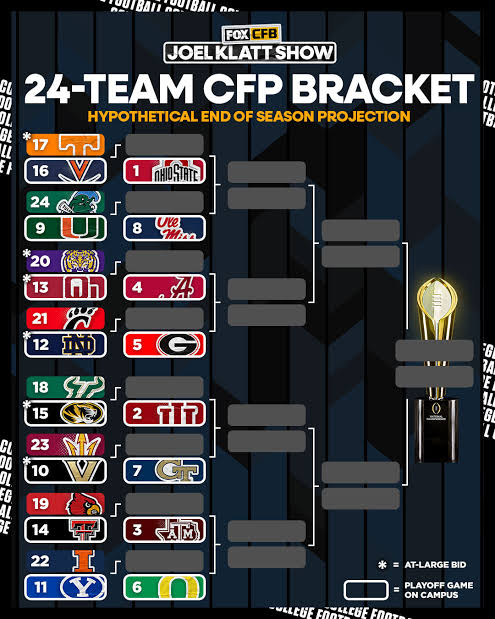
The 12-team College Football Playoff will feature the twelve teams playing in the following order: the top five seeds will host the four teams seeded from 6-9 in the campuses of the lower-seeded teams, with the winners advancing to the regular bowl rounds to be played at sites yet to be determined for the 2026-27 season.
Those same power programs will likely be able to survive off-anemic seasons given the new framework. That means all the additional games above the four current games will mostly serve to solidify the current tournament paradigm and benefit the currently powerful programs in college football’s anemic anarchy.
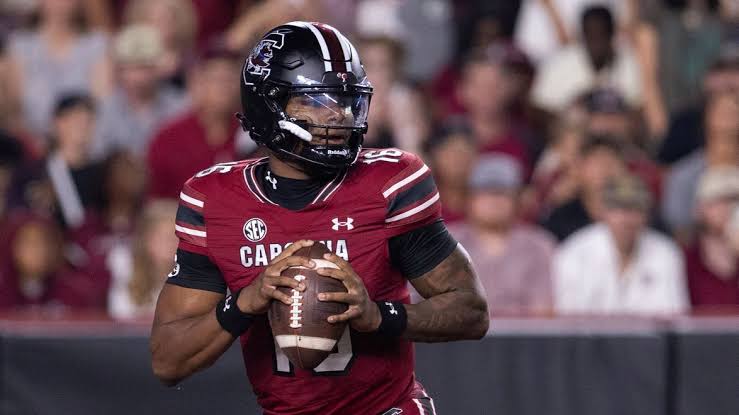
Another key point of consideration for fans is that simply qualifying for the College Football Playoff does not necessarily mean that the favorite will win it all. Yes, they received a second chance to prove themselves on the national stage after an imperfect regular season campaign, but that team must still go out and win games.
Even more important, though, a larger playoff gives fans more reason to follow more teams throughout the regular season. Many games that used to have very little on the line now can have quite a bit riding on them, including whether a team can earn a chance to host a team in the playoff or even earn a spot in the playoff itself.
Why Uncertainty Makes Better Saturdays
There are two kinds of games. First, there is the game where the highly favored team wins easily and the game is over by the 4th quarter. That is not a lot of fun to watch. The second kind of game is one where the underdog team is down by a score in the 4th quarter but the underdog fans are hoping for a comeback. That is a lot of fun to watch.
An enjoyable game though means uncertainty, which even better than enjoyment is, as it makes you a more involved fan, since you’re required to be awake for each change in possession. There’s usually more than one close game on any Saturday, so naturally there are different venues’ worthy of reporting, because every game could be the one which an otherwise obscure program is hoping to be for them.
Rather, entertainment for neutral fans comes from why they should care about this game. In baseball terms, a close game is like an extra-innings all-star game where you root for the underdog (even though you had no interest in them before that hour). You suddenly learn the name of the underdog’s quarterback. The fans of the teams playing against each other’s tournament opponents start calculating how this game impacts their team’s chances to advance to the next round.
ESPN college football writer Matt Barrie recently opined in a series of tweets concerning the effects of Name, Image and Likeness money upon college football to say that it has “flattened out rosters.” While the report focuses to establish quantitative evidence that the trend has in fact “balanced out” programs on the field, it serves rather to establish the perspective that in fact such a shift in competitive balance is in fact under way. [6]
Lastly, there is entertainment value to watching a team struggle for every bit of a win. Just because one team is more talented than another does not mean that you have to dislike watching them. However, the national schedule is more interesting with some competitive games against other top-notch programs.
Basketball Already Understands the Assignment
A look at how college basketball implements a tournament structure to allow for strong teams to earn preferential treatment while also enabling lesser known teams to get their due as they pull off a great run of games and become an overnight sensation.
The magic of a tournament is in the interplay of achievement and possibility. In order to be interesting the underdog does not have to be small. What is compelling is how the team executes against superior opponents, reveals the opponent’s weaknesses, and forces the more talented team to rise to the occasion and prove itself against an unexpected opponent.
Most of all, however, a good run through the tournament can humanize a number of athletes on a program who have not hitherto received much recognition of their individual talents. Indeed, often as not, they are playing with skills greater than their recruiting rating. As with hoops, so with football: stories of the individual players on a program are so much more fun than their prose ur-summaries.
This does not mean that basketball in any way deserves to be compared to football and used as proof that the latter can achieve the same degree of balance between strong and weak teams. For one, basketball is played by much smaller players in much smaller spaces than football. For another, the respective rosters and individual players play far greater roles in each respective sport than they do in the other.
One thing, however, that college football can borrow from the hoops is the opportunity for great performance to warrant success in competition. From a spectator’s viewpoint, watching how a team with great reputation deals with an underdog team is so much fun.
The Case for Dynasties Deserves an Answer
Supporters of a few powerful programs are right to argue that tremendous teams are exciting. Nobody wants to watch a series of blowout games. Dominant teams make for great opponents. An excellent season by a powerhouse program is more impressive if they had to fight for it along the way.
Also important is the entertainment value of watching an elite team at its best playing to their highest level of ability whether that is to win or play well. Watching great teams can be lots of fun and be very compelling. There is nothing wrong with rooting for the home team and wanting them to do well. That doesn’t have to mean that other games lack excitement.
More importantly, however, great teams can be so much more fun to watch than a series of overly one-sided games, because they have to play at their best in order to win. And thus, in building a system that will promote meaningful competition between teams for national championships on an annual basis, it is likely that the greatest teams will be the ones that are the most successful as well.
And likewise for the dynasties of college sports. If in the end the most memorable game for that storied program was the one where the underdog surprising came from behind to knock off the best team in the land, then that was a pretty darn good season.
This would mean that exceptional teams can still be featured but they must also prove themselves in the more competitive college environment. The favorite of the season can still be the central figure of the season but it would not have to be at the expense of all the other programs.
The Cost of Change Is Real
Just because the college basketball landscape has changed doesn’t mean that there aren’t problems. Sure, fans can get to know players and even root for them to develop, but that doesn’t mean that they won’t get upset when key players leave for a variety of reasons.
Again, stability is of huge value to all sports fans. While it is true that short-term deals could lead to some amazing shakeups to college sports, a system organized to only take advantage of short-term deals would be to take away the really compelling elements of the sports. Fans love to follow players as they grow, through struggles and through leadership on their team.
But this frustration should not blind us to the current limitations of the system and lead us to nostalgically wish for a time when coaches could freely pursue other opportunities at other schools, and when conference members could freely pursue membership in other conferences, all while athletes were forced to remain loyal to the college athlete Amereumeria of lower social standing than themselves.
The various items listed above can provide a good framework for maintaining players and enabling them to grow as players and people. While there are certainly no guarantees of retention, a system of player care such as that set out above is far more likely to retain talented student-athletes than a system based on limited alternatives.
Clear rules for fair competition and consistent application are what is needed, not a shake-up of the games that results in uncertainty for fans and continued disadvantage for athletes and programs.
Coaching Still Has to Matter
Another underappreciated thing in an evenly balanced competition is how heavily fans can rely on the coach to improve their team. Yes, recruiting is important, but fans want to know that the coaches on campus are developing players, installing a quality system and making adjustments to outmaneuver their opponents night after night.
Further, while a very talented team can often mask the errors of a struggling coach on a weaker opponent, the poorer coach will be exposed more quickly as the competition is raised.
It will not be a dynasty such as the highly-endowed, top-heavy powerhouse but they can still be a highly competitive program and be great at something or better than other medium-level programs at a variety of things.
By following a below par team over time, fans can witness great improvement and ultimately watch their team do well against very good teams in big games.
So long as there is a reasonably level playing field, great coaches will find a way to stand out. Their teams’ abilities, strategy and play will all be tested. Only through a rigorous search for excellence will we uncover the best.
More Schools Should Matter
The greatest value in terms of sports is emotional connection to a university, to a family of fans of a certain age, to a tradition of supporters at a university of a certain vintage, to a location, to communities. The teams are viewed by fans in terms of where they fit in society. No one wants to be told that their team only exists to fill out the schedules of greater programs year after year.
When a team breaks through and has a credible run at a championship, it brings excitement and fresh interest to the team. Soon students are checking the latest standings between classes, fans and alumni are rearranging their schedules for games, and even people who would rarely discuss sports in a given local community will find themselves arguing about the team and their chances in daily conversations around town and at work.
This new landscape, though imperfect, will make college sports healthier in the long run, in that fans will finally get to care about more than a few famous programs. Yes, big-time athletics is going to continue to cost a lot of money and yield big profits for schools. And yes, there will be another dynasty at some point.
Every fan recognizes that their team is not going to win every time they take the field. So what they are looking for is that one game where they have a reason to hope that this season will be better than last, a reason to hope that next season they will be in the hunt for a national championship and to hope that their school will be featured in the next great sports story.
Because in the end when more teams can chase a team that rules the sport then that team’s rulership will mean so much more. Yes it is nice to be able to freely be the favorite but that has to come with a price. Let the supposed great favorites feel uncomfortable at times and in turn allow for lots of other great programs to seize the national spotlight for one game and then maybe even for an entire season for great reasons.
More from Special Stories
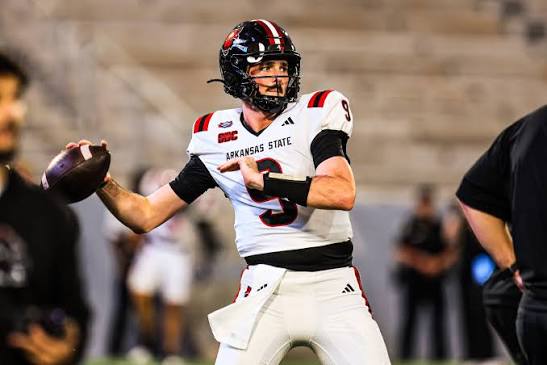
five potential offensive portal entries
Carter Ball
RIVALRY WEEK upSET WATCH
Carter Ball
How oregon can turn around their season
Lucca Mazzie
Why the game still matters: michigan at ohio state game preview
Noah Greenspan